
The best hog roast sides are sharp, crisp and plain, because the pork has rich covered. It has spent hours in its own fat, and the crackling is salt and fat again. Two or three mouthfuls in, the palate wants a break from it. The sides on the table decide whether the guest goes back for more pork or puts the fork down.
That is the idea to plan around. Most people choose side dishes for variety, so there's "something for everyone". Choose them for what the pork is missing and the variety looks after itself.
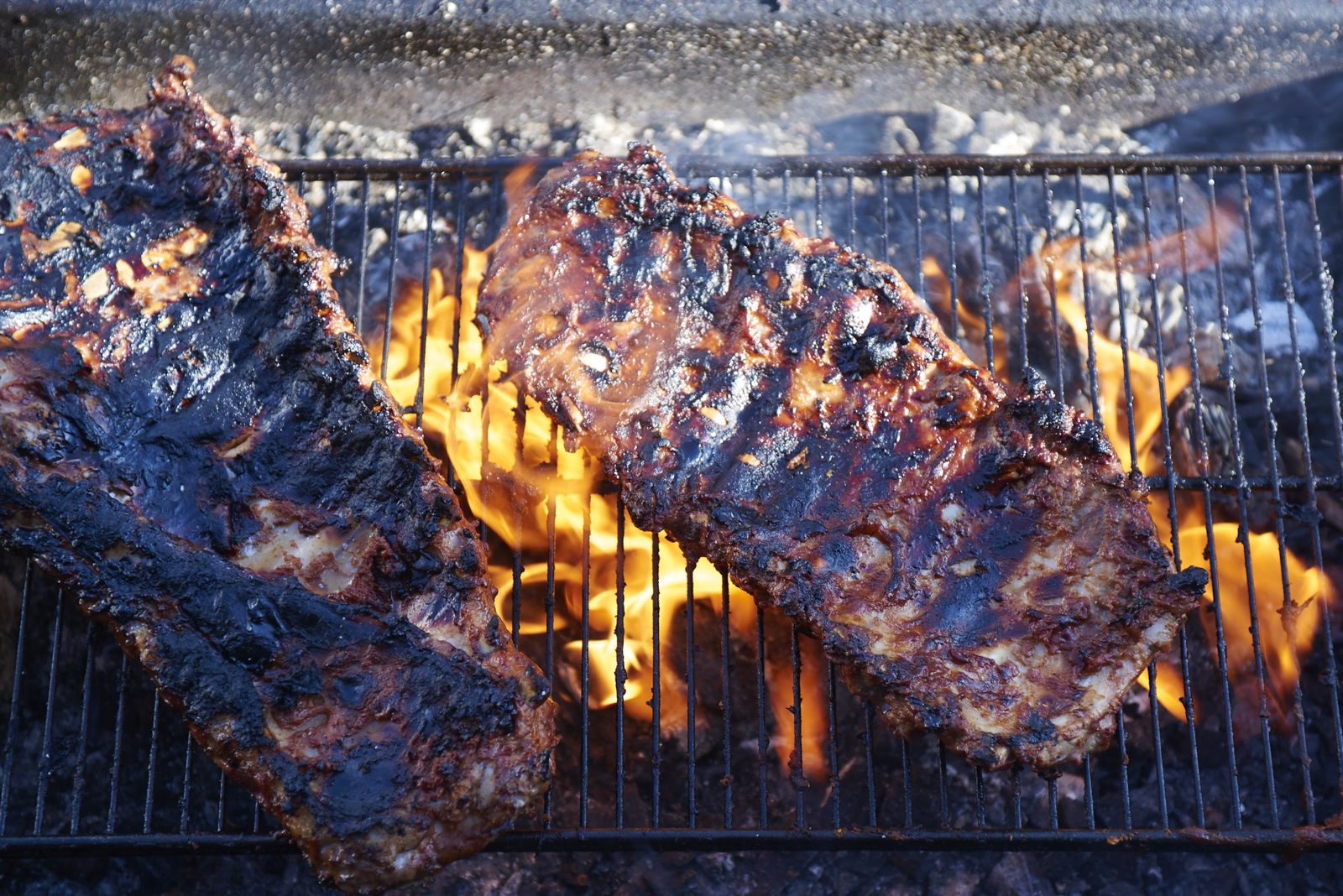
What to serve with a hog roast: start with what the pork is missing
Call it a hog roast or a pig roast, every good plate has four things on it besides the meat.
Something sharp. Acid cuts fat. Apple sauce, a vinegar-dressed slaw, pickled onions, a tomato salad with enough salt and vinegar in it. This is the side that makes the pork taste of pork again after the fourth bite.
Something starchy. A bap, new potatoes, rice, bread for the juices. It turns a portion of meat into a meal, and at a party it is what fills people up.
Something green and crunchy. Dressed leaves, green beans, raw cabbage in the slaw. Texture as much as flavour.
Something that isn't pork. At any event, some guests won't eat it. Their plate needs a main of its own, not a pile of everyone else's sides.
Get those four right and the rest of the choices are down to taste, season and budget.
The traditional hog roast accompaniments: the bap, the apple sauce and the crackling
The classic British hog roast is carved pork in a soft floured bap. Apple sauce and a piece of crackling on top. It has lasted because it covers two of the four jobs in one hand. The bap is the starch, and it soaks up the juices. The apple sauce is the sharp thing.
Rolls and sliders are the right call for a party, a rugby day or evening food at a wedding, when people are standing up and holding a drink. Pulled or carved hog roast goes further in a roll than on a plate, and a guest can come back for a second without it looking like a second dinner.
Apple sauce earns its place because it is sharp first and sweet second. A sauce that is mostly sugar does nothing against the fat. If you make your own, cook the apples down with a little lemon juice and hold back on the sugar. It should taste slightly too sharp on its own. Next to the pork, it won't. (For why the apple goes in the pig's mouth in the first place, see why an apple is placed in the mouth of a hog roast.)
Crackling is the third traditional accompaniment and the one everybody queues for. It needs its own tray and its own timing, which is a subject on its own: how to get perfect pork crackling.
Salads and coleslaw: the side dishes that do the most work
At a sit-down wedding or a buffet, the salads carry more of the meal than people expect. At a wedding we cooked in July for 140 guests, the buffet line carried five salads: baby new potatoes in a Dijon mayonnaise, dressed green leaves, wild rice, a Greek feta salad, and fine green beans with balsamic. A salad chef was on the team for nothing else.
Coleslaw is the most useful side you can put next to a hog roast. Raw cabbage stays crunchy, the dressing brings acid, and it holds up on a warm day better than leaves do. For hog roast, lean the dressing towards vinegar and mustard rather than a thick mayonnaise. Rich pork beside a rich slaw is two rich things.
Potato salad is where the same rule matters most. Potatoes and mayonnaise are both soft and both mild. The Dijon in that July salad was doing the work: it gives the potato something to say next to the pork. Chives, spring onion or a few capers do the same job.
Tomato salads need more than people give them. After a wedding in May, our own notes said the tomato salad wanted "something extra". They were right. A tomato salad beside roast meat needs more salt, more acid and more onion than the same salad on its own.
Leaves are the side that goes wrong fastest. Dressed leaves collapse. Dress them as the meat is being carved, not before.
Hot hog roast sides: potatoes, roasted vegetables and corn on the cob
In summer, most hog roast sides are cold, and that's right. In the colder months, or for a winter party, the plate wants something hot beside the pork.
Potatoes are the obvious one. At that May wedding the baby new potatoes were roasted and served hot with herb butter, next to cold salads. Hot potatoes and cold salads on one plate is a good contrast, and it means only one hot side has to be held at temperature.
Roasted vegetables add colour and a second texture. Carrots, peppers, courgettes and red onion all roast well, and they can go on the same fire or in the same oven as the meat. Roasted Mediterranean vegetables are on our wedding menu for that reason.
Corn on the cob is good grilled, especially for a summer party, but it is worth one thought before it goes on the list. At a wedding we cooked in August, a single guest had a sweetcorn allergy. That meant planning the whole table corn-free: the salads, the salsas, the skewers, anything with cornflour in it. Sweetcorn turns up in more places than you think. Ask before you plan the sides, not after.
Mac and cheese, and the other heavy sides
Mac and cheese topped with pulled hog roast is a good plate of food. It is also rich on rich. It works as evening food or at a casual party, where one bowl is the whole meal. At a wedding breakfast, next to pork and crackling, it is too much.
The rule is one heavy side at most, and only when the rest of the table is sharp and green.
How many hog roast sides, and how much of each
For most events, three to five hog roast sides is right. The same holds for a pig roast at home with twenty friends. Fewer and the plate looks thin. More and nobody gets through them, and the kitchen is spreading the same work across more bowls.
On quantity, we plan salads by weight per guest across all of them together, not per dish. At both of those weddings it was 200g of salads per guest. For the July wedding that was 28kg of salads across five dishes. Bread goes on top of that.
At the May wedding, the waiters passed the bread round during the meal instead of leaving it on the tables. It worked, and the notes afterwards said to keep doing it. Guests don't fill up on bread before the meat arrives.
What a whole hog teaches you about sides at home
On a whole animal, the sides run to the carve, not to the clock. The hog is ready when it's ready, give or take. The potatoes need to come out hot as the first slice goes on the board, and the leaves need dressing in the few minutes before. A green salad dressed forty minutes early in a warm marquee is a bowl of wet leaves.
At family-style weddings on trestle tables, there is an order to what goes down. For that August wedding, each trestle of six was planned for one meat platter and one plate of each salad. The dishes for guests with dietary needs went down first, then the meat, then the salads. That way the safe plate is in front of the right guest before anything is being passed across the table.
Your kitchen at home works the same way on a smaller scale. Dress the salad last. Keep the hot side hot. Make sure the sharp thing is on the table before the pork is. And if there's someone at the table with an allergy, put their plate down first.
Two food safety points apply whatever the size. Hot sides should be held at 63°C or above. Cold sides with mayonnaise, dairy or egg in them go back in the fridge until they are needed. The Food Standards Agency allows cold food out of the fridge for up to four hours, once. On a hot day in a field, that goes quicker than you think.
Hog roast side dishes and dietary needs
A hog roast menu has to work for the guests who don't eat pork, and for the ones who can't eat something in the sides.
Vegetarians and vegans need a main, not just the salads. For that August wedding, the menu gave the vegetarian and pescatarian guests grilled halloumi kebabs. Halloumi is dairy, so it is no good for a vegan. The plan had to know which guest was which.
Go through the sides for the common allergens before the menu is final: egg and mustard in mayonnaise and dressings, dairy in butter, feta, mozzarella and mac and cheese, gluten in bread and any flour-thickened sauce, celery in some coleslaws, and nuts in pesto and some dressings. At the July wedding there were no nuts anywhere, and the supplier checks went down to the mayonnaise in the potato salad.
The one side that catches everybody
If you only get one side right, make it the sharp one. Pork, crackling, a bap and a potato salad is a meal with nothing to cut through it. Put a vinegar-sharp slaw or a proper apple sauce beside it and the same pork tastes better on the fifth mouthful than on the first.
If you're planning a hog roast for a wedding or a party, our hog roast and spit roast menus show how we put the sides together around the fire. And if the crackling is the part you're worried about, start with how to get perfect pork crackling.